- Dozent/in: BaltabolBeatrix
- Dozent/in: DieterleJan
- Dozent/in: FallerRebecca
Lecture course on the concept of sustainability and its implications for cities, on models, theories and practices of urban development in the past and today, on trends of worldwide urbanization and on inclusive cities and urban environments
Die Carl-Ulrich-Siedlung in Offenbach am Main steht am Beginn eines umfassenden Entwicklungs- und Transformationsprozesses. Ziel des Projekts ist es, dass Sie sich erstmals intensiv und praxisnah mit zentralen Fragestellungen der Stadtplanung auseinandersetzen und einen eigenständigen Entwurf zur nachhaltigen Weiterentwicklung eines bestehenden Quartiers entwickeln.
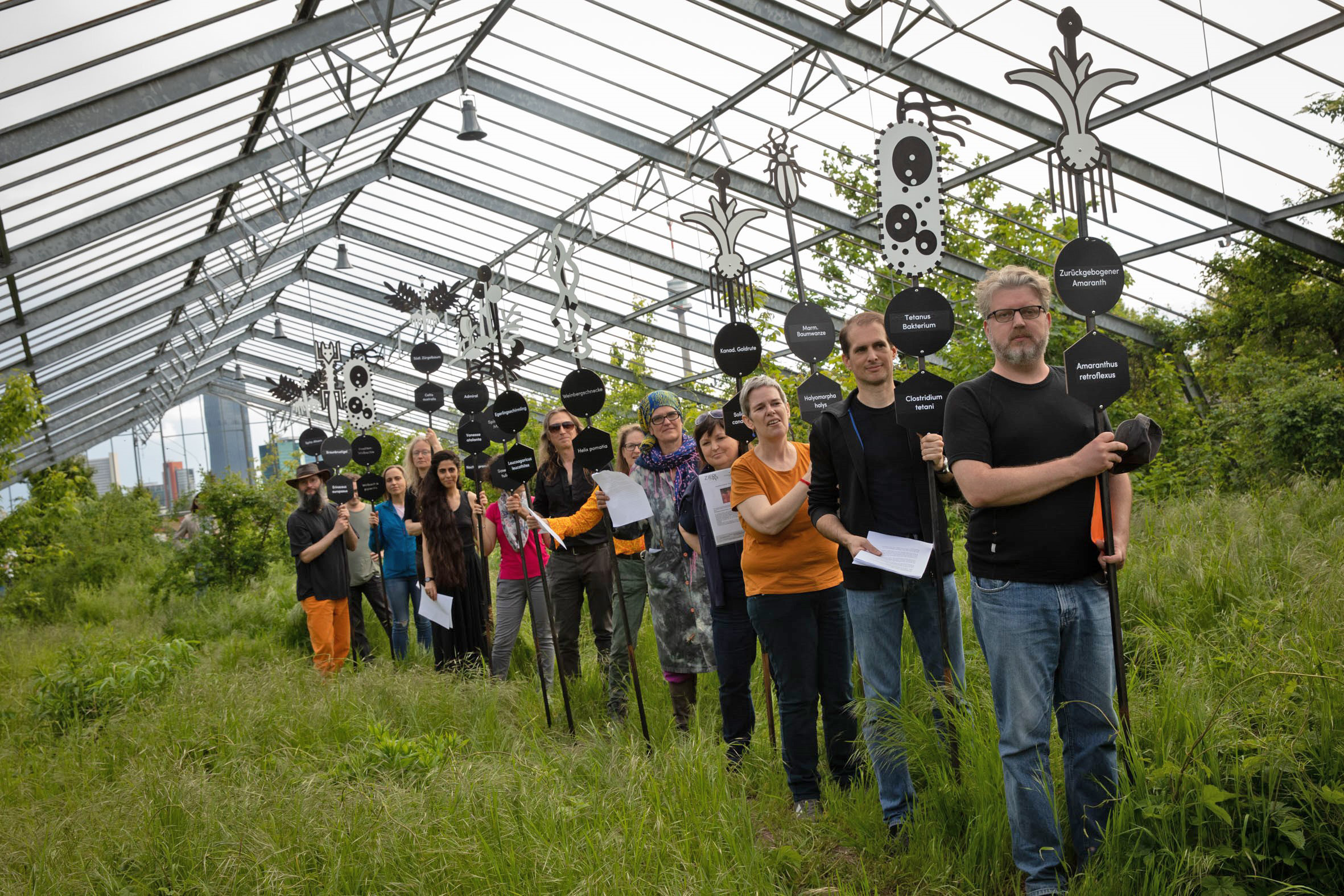
Stadt ist kein Gegensatz zur Natur, und Natur ist kein
grünes Feigenblatt. Stadtnatur bildet den Kontext, in dem wir leben. Unter
dieser Perspektive sind Stadträume zugleich ökologische und politisch
verhandelbare Räume. Wie kann Stadtplanung aussehen, wenn ökologische
Zusammenhänge konsequent mitgedacht werden? Vor diesem Hintergrund analysieren
Studierende urbane Ökosysteme, erfahren Aushandlungsprozesse wie in der
„Organismendemokratie“ und entwickeln eigene Konzeptionen. Das Projekt findet
im Rahmen des World Design Capital Frankfurt RheinMain 2026 statt und wird in
Kooperation mit der Senckenberg Gesellschaft für Naturforschung durchgeführt,
die zudem eine begleitende Vorlesungsreihe Mittwoch abends anbietet.
Ökosystem Stadt / Urban
Ecosystems
Soziale und ökologische Dimensionen nachhaltiger Entwicklung
verstehen
/ Understanding the Social and Ecological
Dimensions of Sustainable Development
// Prof. Jan Dieterle
// Do 8:30 – 11:45 / R 10-125
// 10 TN aus der Stadtplanung
// Das Modul findet zweisprachig auf Deutsch und Englisch
statt. Inputs, Diskussionen und Arbeitsphasen können in beiden Sprachen
erfolgen.
// The module is taught bilingually in German and English.Inputs, discussions and project work
may take place in either language.
Urban Ecosystems - Cities are complex socio-ecological systems in which space, society, nature, the built environment, infrastructure and resources are closely interconnected. The module combines urban ecology and systems thinking and introduces methods for analysing and visualising these relationships across different spatial scales.
Students from architecture, urban planning, and infrastructure & environment jointly investigate a real urban area, select sustainability indicators, collect and visualise data, and integrate different disciplinary perspectives into a shared systems analysis. The aim is to understand key interdependencies, identify potential leverage points for sustainable transformation, and reflect on how different disciplines can contribute to changing urban systems – and where interdisciplinary collaboration is essential.
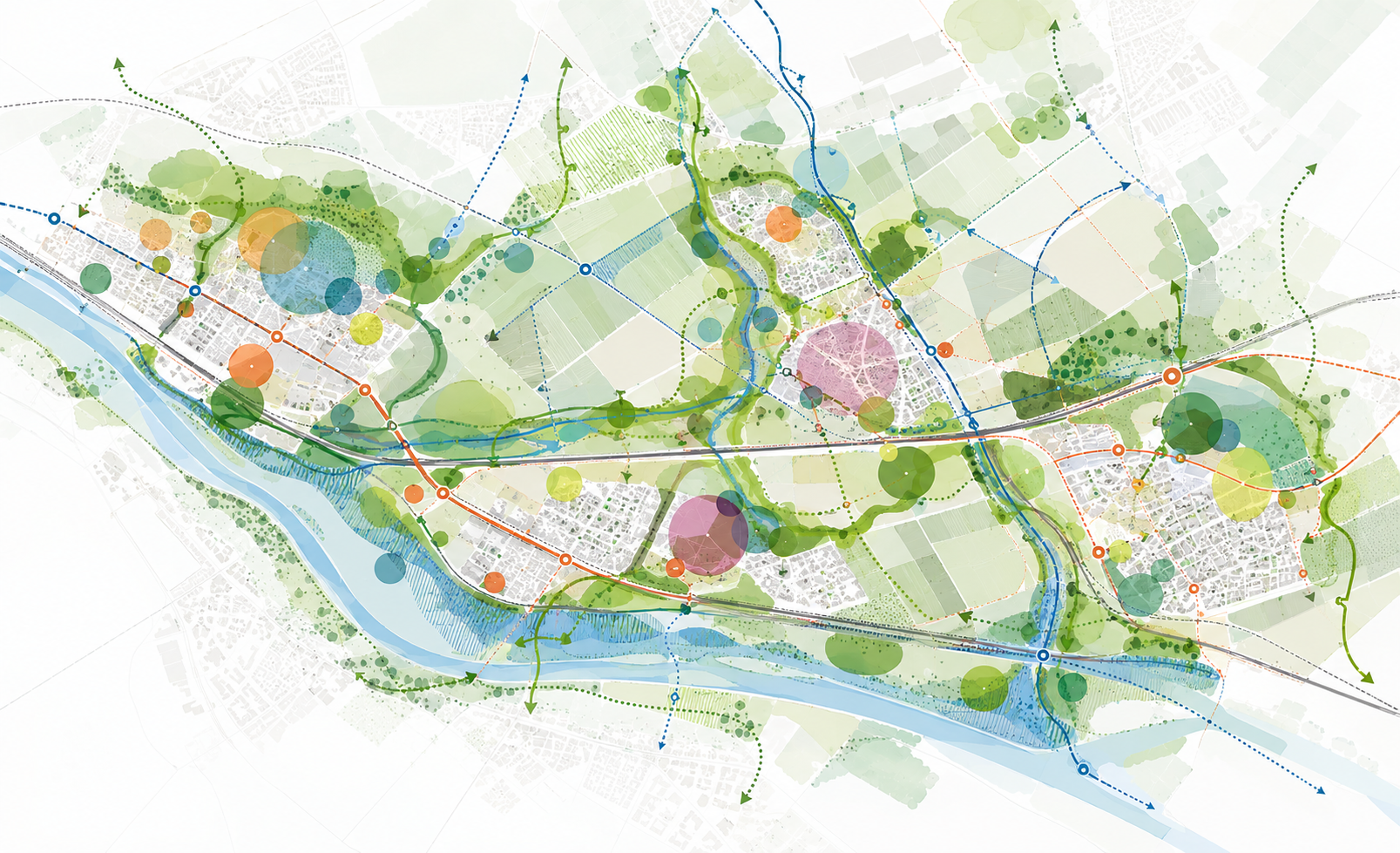
In the winter semester, Maintal and its four distinct districts will serve as the shared study area. Interdisciplinary teams will develop Urban Ecosystem Portraits that reveal ecological, social, spatial and infrastructural relationships at district level. These portraits will then be connected to explore how the four districts interact and contribute to Maintal as an urban ecosystem as a whole.
This course explores how cities and towns can become more sustainable by working within planetary limits while meeting the needs of their communities. Using the Doughnut Economics
framework as an umbrella concept, students will learn to look at urban challenges from both a social and an ecological perspective. They will then develop practical tools and design
strategies based on the principles of Reduce, Reuse, Recycle (3R) to address these challenges.
Through field research in Zierenberg (a small town) and Frankfurt (a big city), students will compare different urban contexts and propose realistic, creative solutions for more sustainable
development.